Affiliate disclosure: This guide includes product recommendations and links to retailers. US Nautics may earn an affiliate commission when you buy through those links at no extra cost to you.
 Why this matters: If you need a portable, versatile towing solution that can be used on several boats or rented pontoons, a heavy-duty tow harness with D-rings and float balls is a cost-effective option. This product functions as a harness, a tow rope, and provides flotation and visibility for the tow line.
Best for: Casual tubers, families, rental operators, and boaters who don’t want permanent modifications.
Key strengths:
Why this matters: If you need a portable, versatile towing solution that can be used on several boats or rented pontoons, a heavy-duty tow harness with D-rings and float balls is a cost-effective option. This product functions as a harness, a tow rope, and provides flotation and visibility for the tow line.
Best for: Casual tubers, families, rental operators, and boaters who don’t want permanent modifications.
Key strengths:
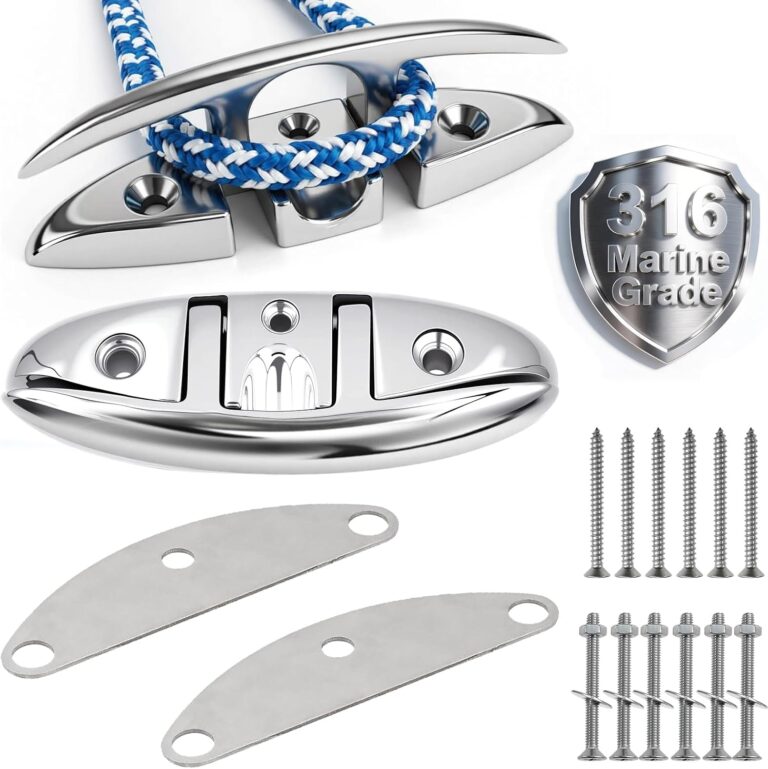 Why this matters: Strong, corrosion-resistant cleats and backing plates will be part of any through-bolted or bolted-on tow setup. If your tow bar or backing plate design relies on deck bolts, invest in marine-grade fasteners and cleats sized for the loads involved.
Best for: Boaters installing a permanent tow point or upgrading dock hardware to handle towing stresses.
Key strengths:
Why this matters: Strong, corrosion-resistant cleats and backing plates will be part of any through-bolted or bolted-on tow setup. If your tow bar or backing plate design relies on deck bolts, invest in marine-grade fasteners and cleats sized for the loads involved.
Best for: Boaters installing a permanent tow point or upgrading dock hardware to handle towing stresses.
Key strengths:
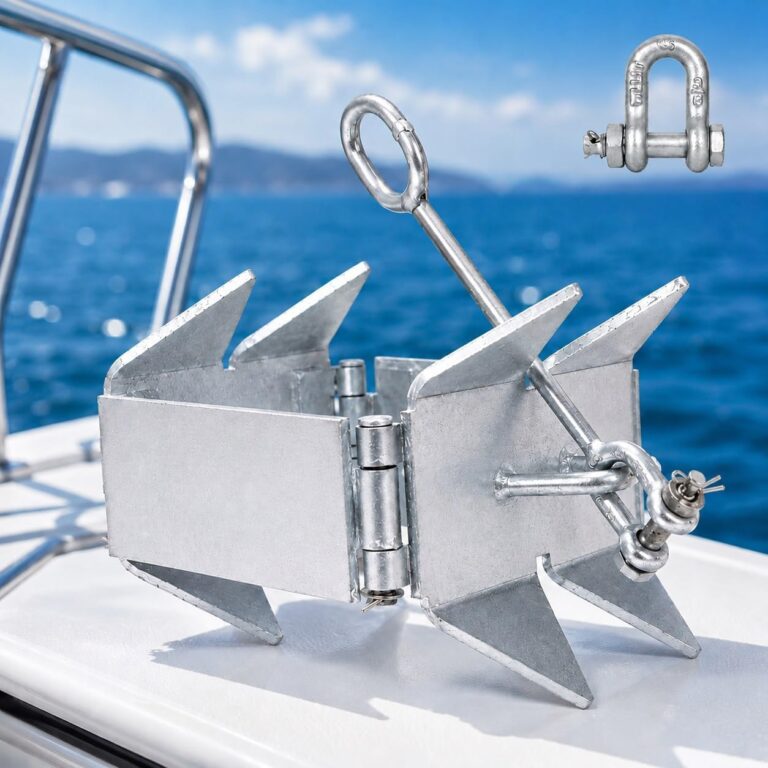 Why this is relevant: A tow day often includes stops for swimming or breaks in shallow coves where anchoring a pontoon is common. A solid folding anchor with a reliable fluke design makes anchoring easier and safer.
Best for: Boaters who frequently stop in shallow water and want a dependable, compact anchor for their pontoon.
Key strengths:
Why this is relevant: A tow day often includes stops for swimming or breaks in shallow coves where anchoring a pontoon is common. A solid folding anchor with a reliable fluke design makes anchoring easier and safer.
Best for: Boaters who frequently stop in shallow water and want a dependable, compact anchor for their pontoon.
Key strengths:
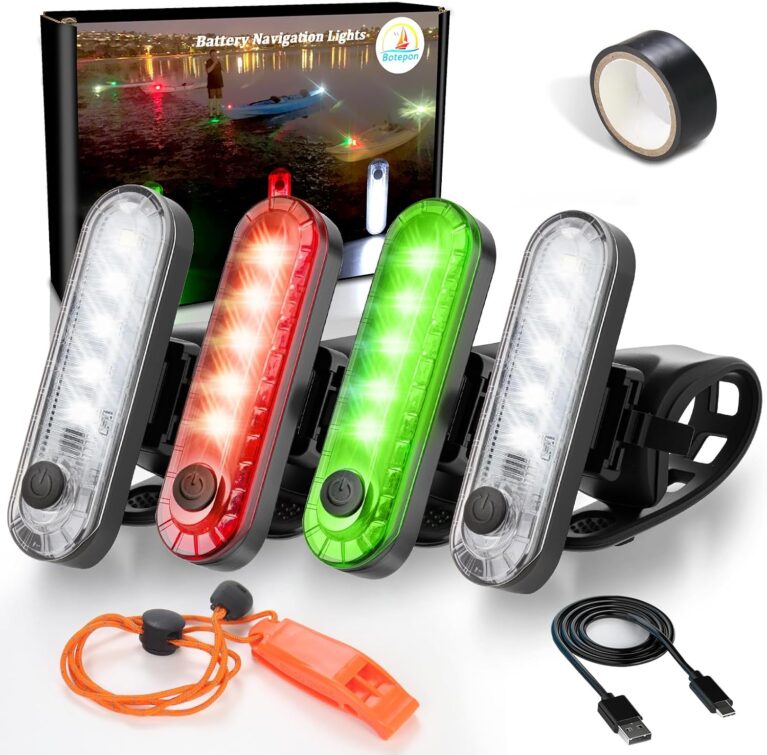 Why this matters: If you plan any towing at dusk or return to the dock after dark, make sure your stern and navigation lights are rated, waterproof, and positioned so the tow bar or harness doesn’t obscure them.
Best for: Boaters who run at night, teach lessons, or operate in low-light conditions.
Key strengths:
Why this matters: If you plan any towing at dusk or return to the dock after dark, make sure your stern and navigation lights are rated, waterproof, and positioned so the tow bar or harness doesn’t obscure them.
Best for: Boaters who run at night, teach lessons, or operate in low-light conditions.
Key strengths:
 Why this matters: Towing activities bring wet gear, sunscreen, and traction mats onto the deck and seats. A good marine vinyl cleaner and protectant will help maintain upholstery, making it easier to remove marks and shielding seats from UV damage.
Best for: Pontoon owners who tow often and want to preserve seat vinyl from repeated use and exposure.
Key strengths:
Why this matters: Towing activities bring wet gear, sunscreen, and traction mats onto the deck and seats. A good marine vinyl cleaner and protectant will help maintain upholstery, making it easier to remove marks and shielding seats from UV damage.
Best for: Pontoon owners who tow often and want to preserve seat vinyl from repeated use and exposure.
Key strengths:
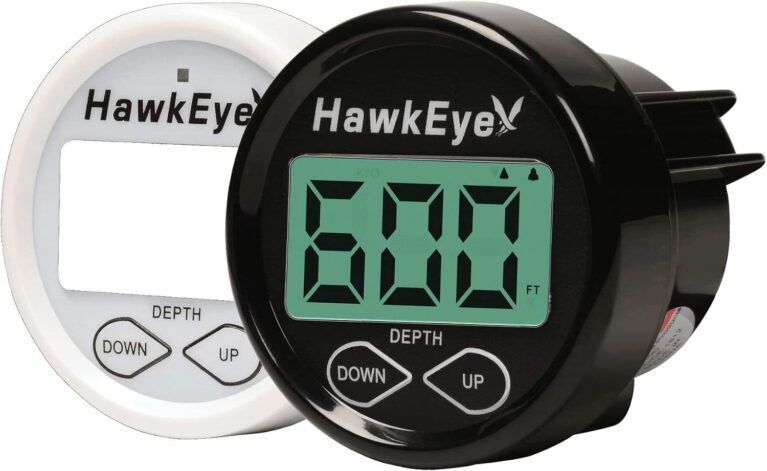 Why this matters: Knowing water depth near shore and in coves helps avoid grounding or hitting submerged hazards while picking up or dropping off tubers and skiers. Portable or dash-mounted depth finders are a useful complement to charts.
Best for: Boaters exploring shallow coves, lakes with varying bottom contours, or unfamiliar waterways.
Key strengths:
is the easiest and most cost-effective option. If you tow frequently or want a neater, more stable setup, invest in a folding or fixed tow bar that’s properly through-bolted to a backing plate and uses marine-grade hardware. Always confirm fit to your rail and consider professional installation for through-deck mounts and towers.
Why this matters: Knowing water depth near shore and in coves helps avoid grounding or hitting submerged hazards while picking up or dropping off tubers and skiers. Portable or dash-mounted depth finders are a useful complement to charts.
Best for: Boaters exploring shallow coves, lakes with varying bottom contours, or unfamiliar waterways.
Key strengths:
is the easiest and most cost-effective option. If you tow frequently or want a neater, more stable setup, invest in a folding or fixed tow bar that’s properly through-bolted to a backing plate and uses marine-grade hardware. Always confirm fit to your rail and consider professional installation for through-deck mounts and towers.
Check All Pontoon Boat Ski Tow Bar Models
Quick summary — who this guide is for
This long-form guide is for pontoon owners who want to add towing capability for water skis, wakeboards, tubes and towable toys. You’ll find the difference between a classic tow bar, a tow harness, and a tower; what to measure on your boat; installation and safety considerations specific to pontoons; recommended products; and a buying checklist to help you pick the right solution for your boat and how you boat.Why a dedicated pontoon boat ski tow bar matters
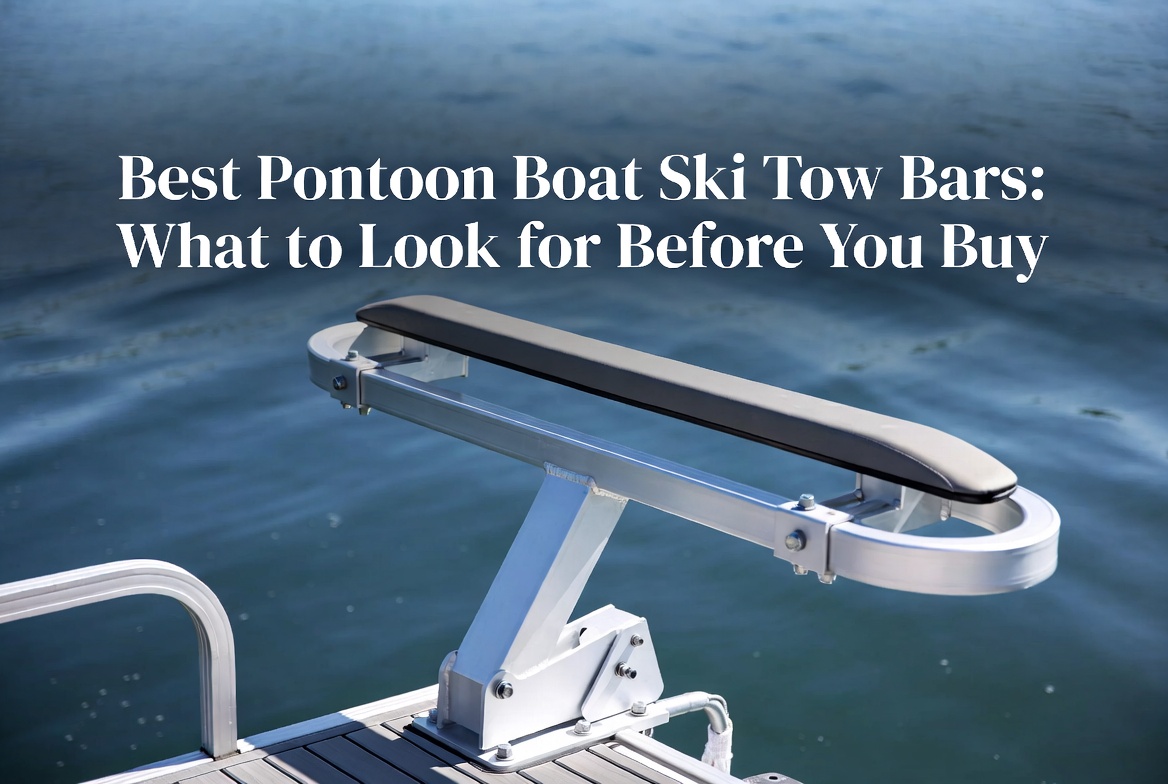
Pontoons are stable and comfortable platforms, but their high gunnels, rail shapes, and deck constructions make towing different than on a V-hull. A proper ski tow bar or tow system keeps the tow point centered, gives the skier a clear line of pull, reduces rope entanglement with railings, and makes attaching/ detaching easier. The right solution also protects your rails and deck from concentrated loads and reduces stress on cleats or seats that aren’t designed for towing forces.Types of pontoon tow systems (overview)
- Fixed tow bars — solid bars bolted to backing plates or through-deck mounts; very rigid and stable.
- Folding tow bars — fold flat for storage and still provide a fixed tow point when deployed.
- Towers — built on the deck or rails and used primarily for wakeboarding/wakesurfing; raise the tow point higher for better air and pop.
- Tow harnesses / tow ropes with D-rings — flexible harnesses or rope systems that clamp to rails or mounting points; portable and often less expensive.
- Temporary clamp-on bars — quick to install, good for rental or occasional use, but watch attachment security and load ratings.
Key features to evaluate before you buy a pontoon boat ski tow bar
Focus on these practical features when comparing tow bars and tow systems:- Mount type and compatibility — how the bar attaches to the pontoon (rail clamp, through-bolted backing plate, weld-on, or tower). Pontoons have round or tapered rails; confirm clamp fit and confirm whether deck reinforcement is needed.
- Load rating / working load limit — look for manufacturer ratings and safety margins. Remember dynamic loads from turns and wakes exceed steady pull.
- Material & corrosion protection — 316 stainless steel is best for long-term saltwater corrosion resistance; powder-coated aluminum is lighter and acceptable for freshwater.
- Tow point height & width — height affects the pull angle; higher points are better for wakeboarding, lower for slalom skiing. Width (spread) minimizes side-to-side rope rubbing on rails.
- Portability & storage — folding options or removable bars are easier to store on smaller pontoons or when you don’t tow regularly.
- Quick-release & safety features — look for simple releases and redundant safety pins so an unexpected load or entanglement can be resolved quickly.
- Attachment hardware included — does the kit include backing plates, bolts, or specialized rail adapters? Missing hardware adds installation cost and complexity.
- Padding & finish — rubber or foam padding prevents scratches and reduces rail wear. Smooth edges reduce injury risk during falls near the stern.
- Compatibility with other accessories — e.g., Bimini tops, swim platforms, and stern ladders. Ensure the tow bar doesn’t block or interfere with essential gear.
Pontoon-specific fit and installation considerations
Before you buy, walk through these steps on your own boat:- Measure the stern rail diameter and distance between rails or stanchions. Many clamp-on bars are designed to fit common diameters (1.25″, 1.5″).
- Look behind the intended mount area for support — is there an accessible cavity where a backing plate can be installed? Pontoons sometimes require drilling through deck and attaching a backing plate inside the pontoon hull.
- Check stern layout — if you have a ski locker, swim platform, or engine bracket, will the bar fit without blocking?
- Consider professional installation if you need through-bolting, welding, or structural reinforcement. Properly distributed loads prevent deck soft spots and rail deformation.
- Confirm whether your pontoon manufacturer has a recommended or approved mount location — some brands void warranties for DIY structural modifications.
Safety rules — what every operator should follow
- Have a dedicated spotter when towing skiers or boarders. The operator cannot both helm and watch the skier safely.
- Use the right rope length for activity (longer for tubing/wake, shorter for slalom skiing) and inspect rope & handle for wear before each use.
- Do not rely on unapproved fittings (seatbacks, bimini poles) as tow points. Use rated fittings or a purpose-made tow bar.
- Understand and follow local speed and safety regulations. Carry required safety gear (life jackets, signaling device, fire extinguisher) per USCG requirements.
- Teach skiers to release the handle in a fall and never wrap the rope around limbs or body parts.
Comparison table — quick checklist for common tow options
| Type | Mount | Best use | Notes |
|---|---|---|---|
| Fixed tow bar | Through-bolt/backing plate | Frequent skiers & surf | Sturdy but needs installation |
| Folding tow bar | Clamp or bolted | Casual towing, storage-sensitive | Convenient; check clamp fit |
| Tower | Deck-mounted, bolted | Wakeboard/wakesurf | Best performance; costly |
| Tow harness / rope harness | Clamps to rails or attaches to D-rings | Occasional tubing & multi-use | Portable; watch attachment security |
Product picks — what works well for most pontoon owners
Below are product options chosen by our site system that are relevant to tow setups and supporting hardware. For each item we explain who it’s best for, strengths and potential drawbacks, and the right type of boater to consider it.1) Tow harness for portable towing
Recommended Pick
Boat Tow Harness with D Rings Float…
【Universal & Heavy Duty Tow Harness】: This versatile boat tow harness is engineered for multiple watersports. It functions as a heavy duty ski tow bar for pontoon boats, a reliable boat tow rope for tubing on water, and…$31.33View Product
- Portable and easy to install on most rails.
- Includes floatation and multiple D-rings for different attachment points.
- Generally lower cost than a welded tow bar or tower.
- Less rigid than a fixed tow bar — may have more movement during starts and tight turns.
- Attachment security varies with rail shape and hardware — verify fit and load rating.
2) Use cleats & backing plates when mounting hardware
Recommended Pick
5″ 6″ Folding Boat Clea…
To calculate the overall star rating and percentage breakdown by star, we don’t use a simple average. Instead, our system considers things like how recent a review is and if the reviewer bought the item on Amazon. It…$35.99 Original price was: $35.99.$25.89Current price is: $25.89.View Product
- 316 stainless steel resists corrosion in both freshwater and saltwater.
- Folding cleat styles reduce tripping hazard when not in use.
- Proper installation must distribute load; simply bolting a cleat to sheet material won’t be enough.
3) Anchors & safe anchoring during downtime
Recommended Pick
Box Boat Anchor, Galvanized Folding…
To calculate the overall star rating and percentage breakdown by star, we don’t use a simple average. Instead, our system considers things like how recent a review is and if the reviewer bought the item on Amazon. It…$59.99 Original price was: $59.99.$56.99Current price is: $56.99.View Product
- Folding design for compact storage in lockers or under seats.
- Galvanized finish offers reasonable corrosion protection for freshwater use.
- Not a substitute for high-holding marine-grade anchors in heavy wind or tide — choose size by boat weight.
4) Visibility & night operations — navigation lights
Recommended Pick
Kayak Navigation Lights Stern Light…
From the brand How did we start? Founded out of passion for outdoor water life, we focus on marine accessories. We fully know the actual needs of water sports lovers, and dedicate to developing professional gear suitable for…$17.99View Product
- Battery-operated and waterproof units are easy upgrades if wiring isn’t practical.
- Bright, visible LEDs suitable for small pontoons and kayaks.
- Battery-operated units require regular battery checks; hardwired lights are more dependable for frequent night use.
5) Keeping the interior clean and protected
Recommended Pick
Boat Juice Interior 2-in-1 Vinyl Bo…
To calculate the overall star rating and percentage breakdown by star, we don’t use a simple average. Instead, our system considers things like how recent a review is and if the reviewer bought the item on Amazon. It…$21.49View Product
- 2-in-1 cleaner and protectant saves time and reduces product clutter.
- Ceramic UV components add extra resistance to sun fade when used correctly.
- Regular reapplication is necessary in high-UV areas — no product prevents all fading forever.
6) Dash-mounted depth finder — safe operation in unfamiliar waters
Recommended Pick
DepthTrax 2B Boat Mount in Dash Dig…
To calculate the overall star rating and percentage breakdown by star, we don’t use a simple average. Instead, our system considers things like how recent a review is and if the reviewer bought the item on Amazon. It…$79.92View Product
- Mounting in the dash keeps depth info front and center during maneuvers.
- Small footprint and simple operation for most users.
- Portable units may be less accurate than integrated transducer systems at high speed; consider placement and calibration.
Practical buying advice — step-by-step
- Decide your priority — portability vs permanent strength. If you tow daily, invest in a through-bolted tow bar or tower. If occasional, a harness or clamp-on folding bar might be enough.
- Measure before you buy — rail diameter, clearance, and deck thickness will determine clamp or bolt selection.
- Match usage to spec — choose load ratings and materials for how you actually tow: tubing with kids, serious wakeboarding, or slalom skiing.
- Confirm included hardware — missing backing plates, bolts, or adapters add time and cost to installation.
- Plan installation — decide if you’ll DIY or hire a pro. Structural modifications or through-bolting typically benefit from a trained marine technician.
- Budget for rope & accessories — a good handle, extra rope, a quick-release, and proper storage bag improve safety and longevity.
- Inspect before first use — even new gear needs a quick torque check and test pull at low speed before taking full load.
Maintenance checklist for tow bars and related gear
- Rinse all metal components with fresh water after each saltwater use.
- Lubricate moving joints and quick-release pins with marine grease.
- Inspect bolts, welds, and clamps monthly for looseness, corrosion, or deformation.
- Check ropes and handles for chafe, frays, and UV breakdown; replace if wear appears.
- Store portable harnesses and ropes dry and out of direct sun to extend life.
- Re-torque mounting hardware after the first few uses and then at the start of each season.
Final recommendations
For most pontoon owners who tow occasionally and want flexibility, a heavy-duty tow harness like
Recommended Pick
Boat Tow Harness with D Rings Float…
【Universal & Heavy Duty Tow Harness】: This versatile boat tow harness is engineered for multiple watersports. It functions as a heavy duty ski tow bar for pontoon boats, a reliable boat tow rope for tubing on water, and…$31.33View Product
Frequently asked questions (FAQ)
Below are practical, concise answers to common buyer questions about pontoon tow bars and towing setups.1. Can I attach a tow bar to any pontoon rail?
Not always. Rails vary in diameter and shape. Some clamps are adjustable, but others fit only common sizes. For through-bolted or welded mounts you must assess deck thickness and internal structure. Always verify manufacturer fitment specifications and consider backing plates or reinforcement if needed.2. Is a tow harness as safe as a fixed tow bar?
Tow harnesses can be safe when properly attached and used within their WLL (working load limit). However, a fixed, through-bolted tow bar is generally more rigid and reliable under repeated heavy loads typical of aggressive watersports. Match the product to frequency and intensity of use.3. Do I need a professional to install a tow bar?
If you’re doing a simple clamp-on installation and the clamp fits securely to the rail, many owners can install themselves. For through-bolted mounts, towers, or when drilling into deck material, professional installation is recommended to ensure structural integrity and to prevent leaks or damage.4. What kind of rope and handle should I use for skiing or tubing?
Use a dedicated tow rope rated for the activity. For waterskiing, a shorter 60–75 ft rope is common; tubing and wakeboarding often use longer lines. Handles should be comfortable with a non-slip grip; avoid handles with metal near the mounting end. Inspect for chafe and UV degradation regularly.5. How high should a tow point be on a pontoon?
For slalom skiing, a lower tow point (closer to stern height) is typical. For wakeboarding, a higher point gives better lift (more “pop”). Pontoons with towers or elevated bars provide the advantage for wake sports; for general use, a mid-height bar that clears the stern and swim platform is a good compromise.6. Can a tow bar damage the pontoon rails?
If improperly installed, yes. Concentrated loads without backing plates or pads can dent or wear rails and deck material. Use marine-grade backing plates, rubber pads, and follow torque specs to distribute load across a larger area.7. What are the legal or regulatory requirements for towing?
Requirements vary by state and local jurisdiction. Generally you must have a spotter in the boat for towed activities, all towed riders must wear USCG-approved PFDs, and navigation rules apply. Refer to your state boating agency and the US Coast Guard safety guidelines for specifics.Check All Pontoon Boat Ski Tow Bar Models
