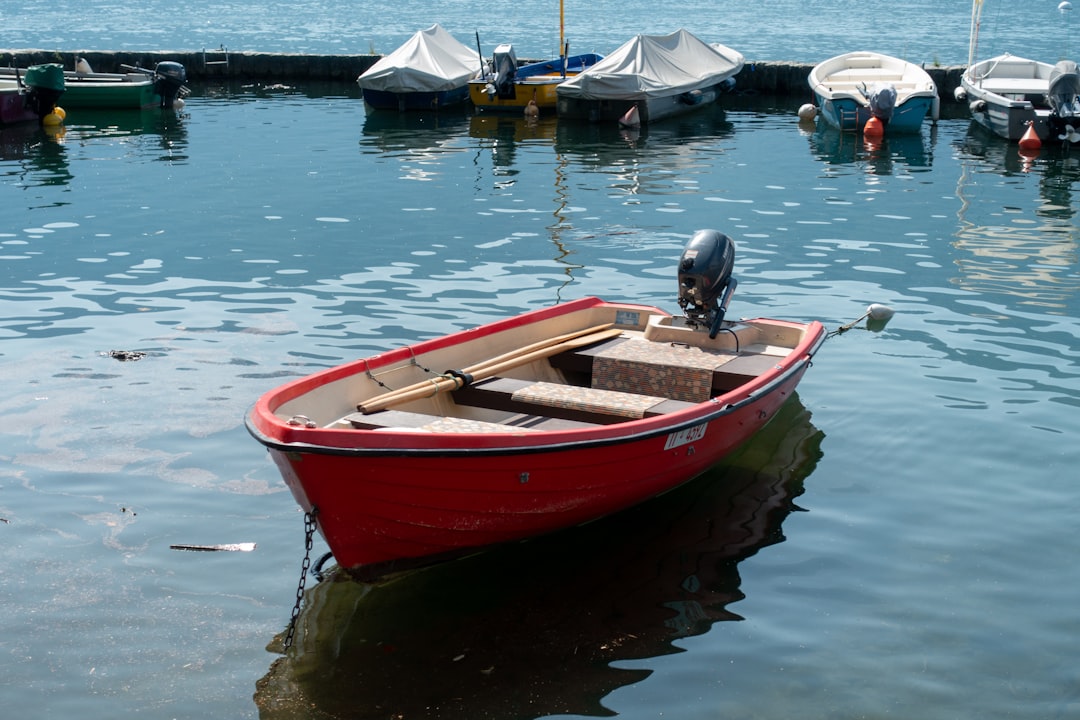
Docking a Boat for Beginners: Simple Tips to Avoid Mistakes
Docking is where confidence and boat control meet. For beginners, tight spaces, wind, current and an impatient dock neighbor can make docking feel stressful — but most mistakes are preventable with a few simple habits.
This guide gives clear, practical steps you can use on your next outing: how to prepare, approach, control speed, use fenders and lines, work with a crew or solo, and correct common beginner errors.
1. Plan and prepare before you approach
Before you get within boat length of the dock, stop and plan. Check wind direction, current, the layout of the slip or piling, and note where you’ll land bow-in or stern-in. Have lines and fenders staged and someone assigned to handle them.
Keep basic safety items on board and accessible — small injuries and minor emergencies happen while docking. Consider stocking a ready kit like a Marine First Aid Kits to handle cuts, scrapes and small incidents quickly.
2. Approach angle: align early, correct gradually
Approach at a shallow angle (10–20 degrees) to the dock; this gives you time to correct and keeps momentum low. Line up so you can use a gentle turn to slide the bow or stern toward the slip instead of trying to force a straight-on landing. Visualize the path and slow sooner than you think necessary.
3. Speed and engine control: slow is safe
Reduce speed well in advance. Use idle or low throttle and feather in short bursts of power to steer — not to accelerate. Inboard boats respond to throttle differently than outboards; practice in calm conditions to learn how your boat moves with small throttle changes.
When close to the dock, neutral and a little reverse pulse often give the finest control for stopping forward momentum and settling the boat into place.
4. Fenders and bumpers: protect both hull and dock
Soft, well-positioned fenders prevent scuffs and reduce stress while you work. Put fenders at the height of the dock rail or cleat, and adjust them as you approach to match the intended contact points. If you boat in crowded marinas or around pilings, reliable fenders are essential.
For extra protection on larger wakes or choppy water, consider high-volume options like Yacht Fenders. Inflatable units can be easier to store and position — for example, inflatable boat bumpers are a compact, effective choice for many small boats and pontoons.
5. Lines, cleats and how to make fast
Use the right dock line and know how to make a cleat hitch quickly. A proper line size and condition matters — a soft, slightly elastic nylon line absorbs shock better than a stiff one. Keep dock lines ready and coiled so they can be flaked out and thrown cleanly.
Stocking quality lines and hardware reduces frustration. Look for durable options such as Yacht Dock Lines and keep a spare cleat or two in good condition on board; consider products like a sturdy boat cleat for reliable mooring points.
6. Using a boat hook and working with crew
A boat hook extends reach and makes securing lines or grabbing dock cleats much easier. If you have a crew, brief them on roles: one handles the forward line, another the stern, and someone manages fenders. Calm, clear commands reduce mistakes — avoid shouting last-minute directions.
If you need a compact, reliable tool, a telescoping boat hook lets you reach cleats or lines without stepping off the boat.
7. Docking in wind and current
Wind and current determine how your boat will swing just as much as throttle. When wind is onshore (pushing toward the dock), approach slightly more slowly and be ready to apply counter-thrust to keep the bow off until a line is secured. With wind offshore (pushing you away), use a more direct, controlled approach and be conscious that your boat can be carried away if you lose power.
Always make your first line fast on the corner that will hold the boat against the wind/current — secure the point that stops the most movement first, then take up slack with additional lines.
8. Common beginner mistakes and how to avoid them
- Rushing the approach — slow down early.
- Not staging lines and fenders — have gear ready before you’re within reach.
- Poor communication with crew — assign and repeat roles.
- Over-reliance on last-second throttle — small, measured adjustments are better.
- Failing to signal when needed — use audible or visual signals if traffic or visibility is an issue; simple safety tools like Boat Safety Whistles are inexpensive and effective to get attention if needed.
Quick checklist before you get to the dock
- Lines coiled and fenders set on correct side
- Assign roles to crew: bow, stern, fender handler
- Plan approach angle and stop point
- Engine controls in good order; know neutral/reverse response
- Have a reliable dock line on hand — consider Boat Dock Lines 1/2″ x 15″ for a durable, easy-handling option
- Emergency items close by (first aid, whistle)
FAQ — Docking basics for beginners
- Q: Should I try to dock bow-first or stern-first as a beginner?
A: Bow-first is generally easier in most marinas because you can see the dock and control the approach angle more precisely. Stern-first gives better line control in tight slips when you can step off the swim platform; practice both in calm conditions. - Q: How many fenders should I use?
A: At minimum place two — one near the bow and one midships — and add another at the stern if the dock is long or the boat is prone to pivot. Adjust height to dock rail or cleat level. - Q: What’s the best way to secure lines quickly?
A: Make a quick cleat hitch or slip a loop over the cleat horn and finish with a half hitch. Practice on shore until you can tie a secure cleat hitch without thinking. - Q: I always overcorrect with throttle — how do I stop?
A: Use short, gentle bursts of throttle and rely on neutral and brief reverse pulses to stop forward motion. Practice in calm conditions to build muscle memory. - Q: What gear is most helpful for docking safety?
A: Essential items include fenders, good dock lines, a boat hook, audible signal (whistle), and a first-aid kit. These basics cover most small issues while docking.
Docking becomes manageable with practice, planning and the right gear. Start slow, practice specific maneuvers in calm water, and always stage your lines and fenders before the approach. A calm, methodical routine turns a stressful task into a predictable one — and builds confidence fast.
Products Featured in This Article
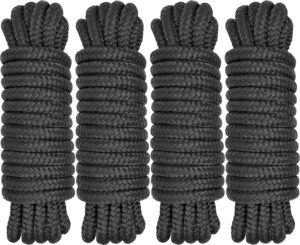
Boat Dock Lines 1/2″ x 15R…
From the brand Shop 1/2 Inch Boat Dock Lines Shop 5/8 Inch Boat Dock Lines Shop…
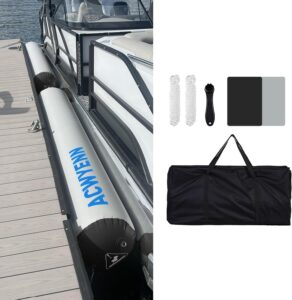
Inflatable Boat Bumpers for Docking…
Boat Fender GREAT FOR BOAT PROTECTION: ACWYENN inflatable boat fender offers great boat protection when tying…
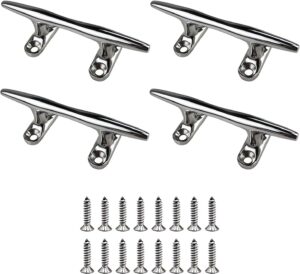
Boat Cleat, 4″/5″/6R…
Boat Cleat,2 PACK 4 inch Marine Grade 316 Stainless Steel Open Base Dock Cleat Rope Cleat…
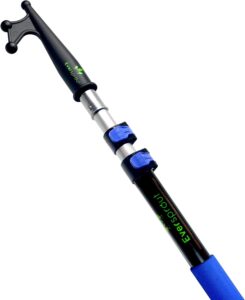
EVERSPROUT Telescoping Boat Hook | …
Product description Eversprout 5-to-13 Foot Telescoping Boat Hook | Floats, Scratch-Resistant, Sturdy Design | Durable &…
