
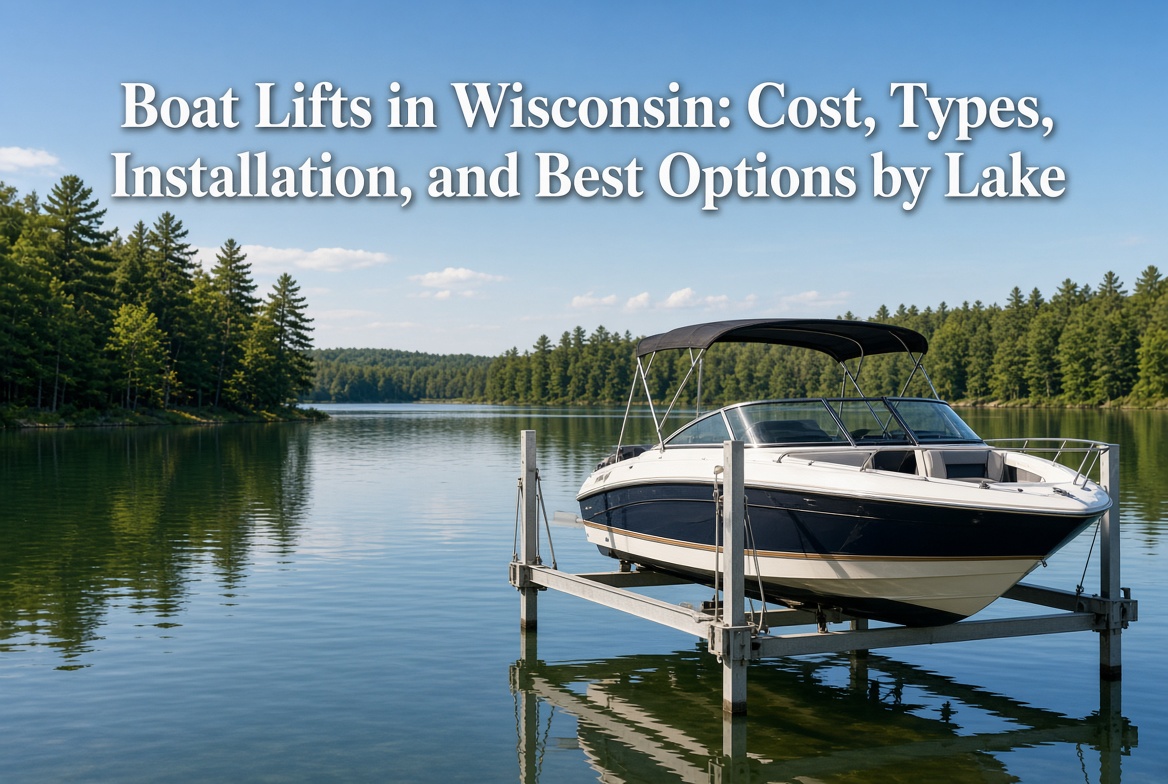
Owning a boat on Wisconsin lakes means choosing the right dock and lift system to protect your investment, improve convenience, and handle seasonal ice and water-level changes. This guide walks through realistic costs for new and used lifts in Wisconsin, compares vertical, hydraulic, floating, and canopy lifts, explains installation and winterization strategies, and lists best options for popular lakes around Lake Country, Pewaukee, Beaver Dam Lake, Rock Lake, Wind Lake, North Lake, Long Lake, Lauderdale and more.
Affiliate disclosure: This article may include affiliate links to products and services (bunk carpet, dock lights, covers, tie-downs, winch accessories) and to dealers and marketplaces. If you click those links and make a purchase, US Nautics may earn a small commission at no extra cost to you.
Overview: How Much Is a Boat Lift for a Dock in Wisconsin?
Prices vary widely based on lift type, capacity, features, site conditions, and whether you hire professional installation. Typical ranges (installed):
- Floating lifts (simple platforms): $2,000 – $7,000
- Standard electric winch-style lifts (bunk lifts): $4,000 – $12,000
- Vertical lifts (tower-style, screw-post or electric): $8,000 – $25,000+
- Hydraulic lifts (in-water hydraulic hoists): $10,000 – $40,000+
- Canopy-equipped lifts (with bimini/canopy): add $1,000 – $4,000
Used lifts in Wisconsin typically sell for 30–70% of the replacement cost depending on age, condition, and whether the vendor will remove and re-install the unit. Expect common used-lift sale prices roughly:
- Small floating platforms: $500 – $3,000
- Used bunk winch lifts: $1,500 – $7,000
- Used vertical/hydraulic lifts: $3,000 – $15,000
Ask for a written breakdown from dealers—materials, concrete, pilings, electrical, labor, permitting—so you can compare apples-to-apples.
Lift Types: What Works Best for Wisconsin Lakes
Choose a lift type based on lake depth, wave action, typical ice formation, your boat’s size/weight, and dock configuration.
1. Vertical Lifts
Vertical (“tower” or “post”) lifts use vertical posts and cross beams to lift the boat straight up and out of the water. Many modern versions are electric or hydraulic with guided carriage systems.
- Pros: Very stable, excellent for larger boats and deep-water installations. Keeps hull above water during winter if raised high enough to avoid ice movement.
- Cons: Costly, may require deep pilings and heavier engineering, can be visually obtrusive.
- Good for: Larger powerboats (20–40+ ft), lakes with fluctuating water levels, boat owners who need longer-term dry storage.
2. Hydraulic Lifts
Hydraulic lifts raise the boat using cylinders and a pump system. They deliver smooth, controlled lifts and are often used for center-console, cabin cruisers, and jet boats.
- Pros: Smooth operation, good for heavier boats, low maintenance if installed correctly.
- Cons: More complex (hydraulic lines, pumps), higher upfront cost, service requires trained technicians.
- Good for: Heavier boats, owners seeking easy operation and reduced jerk during lifting/lowering.
3. Floating Lifts (Platform or Floater)
Floating lifts are platforms buoyed with foam or pontoons that keep a boat slightly above the water or allow it to float on and off. They are the most economical and simplest.
- Pros: Low cost, easy to install, ideal for shallow, calm lakes and smaller boats or pontoons.
- Cons: Less secure in wakes or strong wind; subject to ice movement if left in water during freeze—most owners remove or lift them for winter.
- Good for: Small runabouts, jet skis, pontoons, and seasonal or rental situations.
4. Canopy and Bimini-Equipped Lifts
Canopies are optional additions that protect the boat from sun, UV fading, and bird droppings. They are popular on pontoon lifts and for owners who use their boat year-round.
- Pros: Protects upholstery and finish, increases resale value by preserving boat condition.
- Cons: Adds cost and wind load; may require removal in winter or high winds if not rigidly designed.
- Good for: Pontoon owners and anyone storing a boat for long summer days on the water.
Comparison Checklist: Which Lift Should You Choose?
| Feature | Floating | Bunk/Winch | Vertical | Hydraulic |
|---|---|---|---|---|
| Typical cost (installed) | $2k–$7k | $4k–$12k | $8k–$25k+ | $10k–$40k+ |
| Best for | Small boats, pontoons | Most recreational boats | Large boats, deep water | Heavy boats, smooth lift |
| Winter resilience | Low (often removed) | Medium (raise high/remove winch) | High (designed for out-of-water storage) | High (if winterized) |
| Maintenance complexity | Low | Medium | Medium | High |
Weight-Capacity Chart (Quick Reference)
| Boat Type | Typical Weight | Recommended Lift Capacity |
|---|---|---|
| Small Jet Ski / PWCs | 300–800 lbs | 1,000–1,500 lbs |
| Small Runabout / Fishing Boat (16–18′) | 900–2,000 lbs | 2,000–3,000 lbs |
| Aluminum Bass Boat / Ski Boat (18–20′) | 1,800–3,000 lbs | 3,000–4,000 lbs |
| Pontoons (16–22′) | 1,500–3,500 lbs | 3,000–5,000+ lbs |
| Cuddy / Small Cruiser (20–26′) | 3,500–6,000 lbs | 6,000–8,000+ lbs |
| Large Cruisers (26–35′) | 6,000–15,000+ lbs | 8,000–20,000+ lbs |
Always check your boat’s dry weight (manufacturer spec) and add fuel, gear, and people when choosing capacity. When in doubt, select a lift with a 20–30% safety margin over the loaded weight.
Installation: Steps, Timeline, and Costs
Typical installation steps (dock lift):
- Site evaluation: Water depth, lakebed composition (silt vs rock), wave/wake exposure, OHWM concerns.
- Permitting and HOA approvals (if required).
- Structural prep: Pile driving, concrete footings or setting anchors, and dock attachment points.
- Electrical run for powered lifts and safety disconnects.
- Lift assembly and rigging, leveling, and test lifting with water load.
- Owner training and paperwork (warranty, maintenance schedule).
Timeline: Simple floating lifts can be installed in a day; standard bunk lifts typically take 1–3 days; vertical and hydraulic lifts often require multiple days and specialized equipment—plan 1–2 weeks including permitting and scheduling.
Costs not always obvious: site access (truck/crane access), rock removal, electrical trenching, and shoreline stabilization can add $1,000–$10,000 depending on complexity. Get at least three quotes that list materials, labor, and exclusions.
Used Boat Lifts in Wisconsin: How Much and What to Inspect
Used lifts are attractive for reducing cost but require careful inspection and often restoration. Typical price factors:
- Age and model
- Visible corrosion or rust
- Condition of bunks, carpeting, rollers
- Winch motor condition and cable wear
- Whether the seller will remove and transport the lift
- Availability of replacement parts
Used lift inspection checklist before buying or bidding:
- Inspect piling posts/welds for corrosion and pitting.
- Check cables for frays, rust, or kinks—replace if any doubt.
- Test the motor and limit switch; watch for slow or irregular motion.
- Examine bunks and bunk carpet—mildew, soft spots or rot means replacement.
- If hydraulic, look for leaks and check pump operation and fluid condition.
- Ask for service records or proof of winter storage.
- Confirm the lift’s capacity plate and model number for parts lookup.
Even if the purchase price looks low, budget for re-carpeting bunks, new winch cables, and perhaps a motor rebuild—$500–$3,000 common. Factor transport and reinstallation costs on your lake.
Boat Lift Repair: Common Problems and Typical Costs
Common repair items and approximate cost ranges (Wisconsin market):
- Cable replacement: $200–$900 (depends on cable length/quality)
- Winch motor replacement: $400–$1,500
- Bunk carpet replacement: $200–$800
- Hydraulic pump rebuild/replacement: $800–$4,000
- Battery replacement (for solar/battery-powered units): $150–$600
- Pile/piling repairs or replacement: $500–$5,000+
Tips for repair and maintenance:
- Keep a winter checklist: remove batteries or maintain trickle charge, drain pumps, and ensure no water sits in hydraulic lines that can freeze.
- Grease moving parts annually and rinse off any salt (if ever exposed to brackish conditions).
- Replace cables on schedule—don’t wait for them to fail.
- Use UV-rated electrical boxes and GFCI protection for shore power; have licensed electrician handle wiring.
- Find a reputable local lift technician—ask for references and current liability insurance.
Ice and Winter Realities in Wisconsin
Wisconsin lakes freeze and expand—lake ice can damage docks and lifts if left in the water improperly. Considerations:
- Ice Heave: Pressure from expanding ice can lift, warp, or shear pilings and frames.
- Lift Removal vs In-Water Storage: Many floating lifts and some winch lifts must be removed or lifted above the highest expected ice movement. Vertical lifts designed for out-of-water storage are best for winter.
- Timing: Remove or secure lifts before freeze-up and re-install after thaw. Monitor year-to-year freeze dates and plan removal in October–November commonly.
- Shrink Sleeve or Isolation: Avoid metal-to-metal contact that can experience frost damage—use protective sleeves where recommended.
- Insurance: Check with your homeowner or marine insurer—some policies require lift removal or certain winterization steps to cover freeze damage.
Common winter methods used by Wisconsin owners:
- Take lifts out completely and store on shore (recommended for cheaper floating systems).
- Raise vertical/hydraulic lifts to highest safe position and secure them per manufacturer instructions.
- Disconnect shore power and remove batteries or use controlled trickle charging indoors.
Permitting and Local Rules: What to Check in Wisconsin
Before ordering or installing a lift, check these sources and steps:
- Contact your local municipal office or county zoning/planning department for pier and dock regulations (setbacks, length, mooring rules).
- Contact your lake association or HOA—many have specific rules about lift type, appearance, and placement.
- Check Wisconsin DNR resources for waterway regulations. Some alterations near shorelines or public trust uses may need review—this depends on location and whether the lake is controlled by state rules.
- Confirm utility (power) permits with your electrician and local building inspector.
- Request guidance from your installer—they often handle permits and know local jurisdictional nuances.
Tip: Save time and reduce surprises by asking prospective lift companies if they include permit filing in their quote.
Best Lift Options by Popular Wisconsin Lakes
Each Wisconsin lake has unique characteristics—depth, prevailing winds, ice behavior, and local rules. Below is a quick guide for common lakes near Lake Country, Pewaukee, Waukesha County, Jefferson County, and nearby communities. This is a practical starting point; always confirm specifics with local authorities and dealers.
| Lake | Typical Conditions | Recommended Lift Type | Notes |
|---|---|---|---|
| Lake Country (Geneva/Delavan area) | Moderate waves, popular boating | Vertical or heavy-capacity bunk/hydraulic | Choose higher-capacity lifts—busy lake with larger boats and stricter HOA rules in some neighborhoods. |
| Pewaukee Lake | Shallow near shore in areas, variable winds | Bunk winch lifts or floating pontoons for shallow docks | Check city harbor rules and water depth before choosing vertical posts. |
| Okauchee Lake | Calm coves, private docks | Floating lifts and bunks for pontoons and runabouts | Easy to install floating systems in coves; vertical if you need out-of-water protection. |
| Rock Lake | Shallow areas, agricultural runoff | Shallow-draft floating lifts or bunks with longer arms | Watch for seasonal water level change and weedbeds. |
| Beaver Dam Lake | Varied shoreline, recreational lake | Bunk or moderate vertical lifts | Lift choice depends on neighbor rules; consult Beaver Dam municipal guidelines. |
| Wind Lake | Smaller, wind-exposed | Sturdier vertical or hydraulic lifts to resist wakes | Wind and wakes make floaters less desirable in exposed spots. |
| North Lake | Smaller lake, residential docks | Floating lifts or bunk lifts | Great candidate for pontoons—canopy options popular. |
| Long Lake | Deep in parts, varying conditions | Vertical or hydraulic for larger boats | Deep water allows vertical installations; consider higher-capacity lifts for cruisers. |
| Lauderdale Lakes | Interconnected lakes, higher traffic | Durable bunk or vertical lifts | Traffic and wakes mean more stable lifting systems are better. |
If you want a dedicated page for your lake, we support pages like Boat Lifts for Sale in Bayside, WI and can create local lift guides for Lake Country and others.
Where to Buy Lifts and Marketplace Options
Buy new from a reputable dealer that offers local installation and warranty support. Ask for references on recent installs in your lake. For used lifts, the following places are commonly checked by Wisconsin buyers:
- Local lift dealers and marine shops (search for regional installers).
- Online marketplaces and classifieds (Boat Trader, Craigslist, Facebook Marketplace).
- Auctions and marina sell-offs—good deals but higher risk; inspect before buying.
Many lift dealers also sell accessories like bunk carpet, dock lights, winch kits and covers; you can find related products (bunk carpet, lights, covers, tie-downs, winch accessories) through Amazon or marine supply houses. If you don’t want to invest yet, consider renting a boat this weekend—see All Boat Rentals And Bookings to get on the water immediately.
Maintenance Schedule & Annual Checklist
Annual maintenance reduces repair costs and extends lift life. A typical schedule:
- Spring (pre-season): Inspect cables, bunks, motor, limit switches; grease moving parts; test lifts under load.
- Summer (mid-season): Tighten bolts, inspect bunks/carpet for wear, check electrical connections monthly.
- Fall (pre-winter): Remove or raise lift as recommended, disconnect power, remove batteries or bring indoors, winterize hydraulic systems.
- Winter: Store any removable parts in a dry place and inspect frame periodically if stored on shore.
Common Mistakes to Avoid
- Buying a lift based only on price: undersized or incorrect type leads to safety issues and more repairs.
- Not accounting for loaded boat weight (fuel, gear, people).
- Skipping permits or HOA approvals: you may be fined or forced to remove the lift.
- Leaving floating or non-winterized lifts in during freeze-up.
- Choosing a dealer without local references or on-lake experience.
Cost-Saving Tips
- Buy a lift with a slightly higher capacity to avoid overloading and future upgrades.
- Consider used lifts with documented maintenance—but budget for reconditioning.
- Bundle installation, electrical, and dockwork with one qualified contractor for efficiency.
- Shop accessories (carpet, lights, straps) on Amazon or marine supply sites—compare ratings and warranties.
- Ask neighbors about what worked—local boating communities are great sources of practical advice.
If You Need a Boat Now — Rental CTA
Not ready to buy a lift? Rent a boat and enjoy Wisconsin lakes this weekend. Renting lets you learn which type of lift or dock setup fits your routine before committing. Browse rentals and availability: All Boat Rentals And Bookings.
FAQ — Boat Lifts in Wisconsin
1. How much does a used boat lift typically cost in Wisconsin?
Used lifts range widely: small floating platforms can be $500–$3,000, used bunk lifts often $1,500–$7,000, and used vertical/hydraulic lifts $3,000–$15,000. Price depends on condition, age, and whether removal/transport is included.
2. Do I need a permit to install a boat lift in Wisconsin?
Permitting depends on municipal, county, and sometimes state rules. Check with your local zoning or harbor office and your lake association. The Wisconsin DNR provides general guidance for waterways; many installers will include permit filing in their estimate.
3. Can I leave my lift in the water during winter?
That depends on lift type and local ice behavior. Floating lifts are usually removed for winter. Many vertical or heavy-duty hydrauic lifts can be left if raised and secured per manufacturer instructions. Always winterize per the lift manual and check insurance requirements.
4. What are the most common repair issues?
Top issues are frayed cables, failed winch motors, worn bunk carpet, and hydraulic leaks. Regular inspection and pre-winter maintenance catch many problems early.
5. Should I buy new or used?
Buy new for warranty, parts availability, and installer support—ideal if you plan to keep the boat long-term. Used can save money but inspect carefully and budget for repairs/upgrades.
6. How do I choose the right capacity?
Use your boat manufacturer’s dry weight and add fuel, gear, and potential passenger weight. Choose a lift with 20–30% extra capacity above the loaded weight for safety and longevity.
7. Can lift accessories extend life or safety?
Yes—bunk carpet protects hulls, dock lights improve safe access, tie-downs reduce sway in storms, and quality winch accessories ensure smoother operation. These are often affordable upgrades found on Amazon and marine stores.
Local Installer and Marketplace Suggestions
Seek installers with local Wisconsin experience—ask for references on the specific lake and proof they handle permits. For used lifts check local marketplaces or marine auctions. For accessories (bunk carpet, dock lights, winch straps, covers), look at major online retailers and marine suppliers for reviews and shipping to Wisconsin. If you want immediate on-water access before installing a lift, consider a rental: All Boat Rentals And Bookings.
Final Checklist Before You Buy or Install
- Confirm boat weight + 20–30% safety margin
- Get multiple written quotes (including permits and electrical work)
- Verify installer references on your specific lake
- Review winterization instructions and insurance requirements
- Inspect used lifts thoroughly or hire a professional inspector
- Plan for annual maintenance and a service provider
Choosing the right lift is both technical and practical—matching lift type to your boat, site, and lake behavior is the best way to protect your investment and enjoy worry-free boating in Wisconsin. Use local resources, get multiple quotes, and don’t skip winter-readiness steps.
For more gear (bunk carpet, dock lights, winch accessories, tie-downs, and covers) explore relevant categories at US Nautics like Boat Covers And Storage, Boat Deck Lights, and Boat Dock Lines for related products and guidance.
Conclusion
Boat lifts in Wisconsin require matching type and capacity to your boat, local lake conditions, and seasonal ice realities. Vertical and hydraulic lifts provide robust long-term protection for larger boats, while floating and bunk lifts offer affordable solutions for smaller craft. Used lifts save money but demand a careful inspection and maintenance plan. Plan early for permits and winter removal, and use local installers with lake-specific experience. If you’re not yet ready to buy or install, renting offers a flexible way to enjoy the lakes while you make a confident, informed decision.
Official Links:
