Affiliate disclosure: This guide discusses boat lifts and related gear and includes links to product categories where you can find items to outfit your lift and dock. USNautics may earn an affiliate commission from qualifying purchases at no extra cost to you.
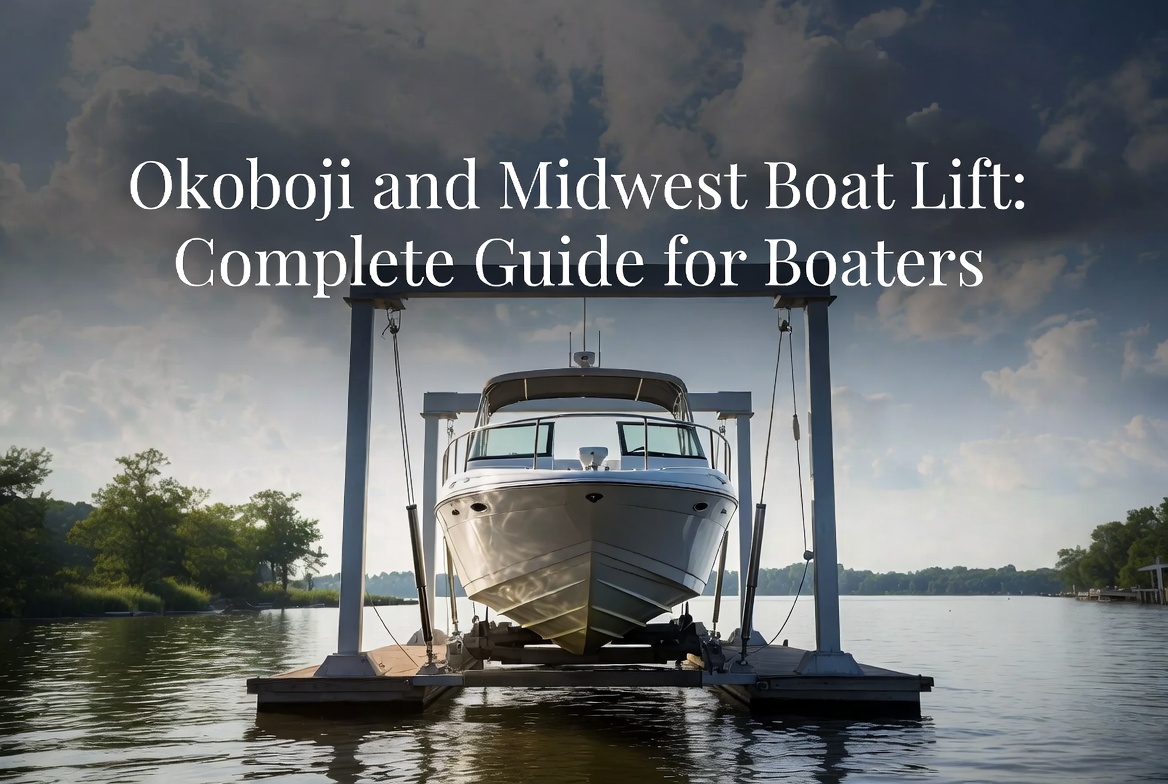
Okoboji and Midwest Boat Lift: Complete Guide for Boaters
If you boat on the Iowa Great Lakes — the West, East and Upper/Lower Gar, with Big Spirit and West Lake Okoboji nearby — you already appreciate how quickly conditions, seasons, and local rules influence how you store and protect your boat. A quality boat lift pays for itself in convenience and reduced wear, but choosing the right one and installing it correctly requires thought. This guide will help Okoboji boat owners and Midwest boaters understand the types of lifts available from manufacturers like Midwest Boat Lift (and similar suppliers), how to size and site a lift for local conditions, installation and maintenance steps, and which accessories you should consider when completing a safe, durable dock setup.
Why a boat lift matters on Okoboji
- Water clarity, sandy bottoms, and seasonal water level changes mean boats that sit in the water are exposed to algae growth, abrasion from sand, and extra corrosion — all reasons owners lift vessels when not in use.
- Icy winters in the Midwest create freeze-and-thaw cycles. Lifting your boat above ice and away from moving ice fields helps avoid hull damage and reduces stress on trim tabs and outdrives during winter.
- Lifts reduce time spent tying up and make launching faster — important on popular summer weekends at Okoboji when docks fill up.
Below you’ll find a practical approach to choosing, installing, and maintaining a lift tailored to Okoboji conditions, plus a checklist and comparison table to help you shortlist options.
Overview of Midwest-style boat lifts and common types
Manufacturers that serve the Midwest offer several lift styles that perform well on lakes like Okoboji. Each style has tradeoffs in cost, ease of use, and suitability for boat types.
- Standard vertical elevators: Cable or winch-driven lifts that raise the boat vertically above water. Good for many runabouts and fishing boats.
- Hydraulic lifts: Smooth, powerful, and often used where frequent operation and quick adjustments are needed. They can handle heavier boats but cost more and require more maintenance.
- PWC and small-boat lifts: Compact lifts designed for jet skis, small aluminum boats, and kayaks. They save space and are simple to operate.
- Pontoon lifts (cradle or pontoon-specific): Wide bunks or lifts with pontoons to support the flat hull and distribute weight evenly, reducing stress on pontoons.
- Swing and low-profile lifts: Useful where shorelines are shallow or docks are permanent and you want quick access with minimal obstruction.
Midwest suppliers often allow customizations: canopy tops, stainless hardware, upgraded bunks, galvanized or powder-coated frames, and motor options. Choosing these options is a balance between budget and how much you want to protect the boat’s finish, upholstery, and mechanical systems.
How to choose the right lift for your Okoboji boat — step-by-step
Choosing the right lift involves boat specs, site conditions, and usage patterns. Follow these steps to make a practical selection.
-
Collect your boat’s critical dimensions:
- Weight (dry weight + expected gear and fuel)
- Overall length and beam
- Hull shape (deep-V, flat-bottom, pontoon, jet-drive)
-
Decide on lift capacity — add margin:
Choose a lift rated at least 15–25% above your boat’s fully-loaded weight. That gives room for extra fuel, gear, and safety margins. For pontoons, verify the manufacturer’s recommended pontoon lift capacity—distribution is as important as overall capacity.
-
Match lift type to hull:
- Deep-V runabouts: V-shaped bunks or lift cradles that follow the hull contour
- Pontoons: Wide bunks or pontoon-specific supports that lift on the tubes, not the deck
- Jet boats and PWCs: PWC-specific saddles or cradle lifts
-
Survey your shoreline and dock:
Measure water depth at recommended lift location at low water and high water. Note obstructions, prevailing wind and wave direction, and how much shore slope exists. If the bottom is soft mud, piling anchors may be necessary; if it’s hard or rocky, a different anchoring strategy will be required.
-
Check local regulations:
Contact the Okoboji lake association, property owner association, or city port authority to confirm rules on lift placement, canopy height limits, and setbacks. Many lakes have restrictions on the size and location of docks and lifts.
-
Decide on manual vs. powered:
Manual winch lifts are economical and simpler. Electric or hydraulic lifts add convenience and can be safer for larger boats. If you choose powered, plan for GFCI-protected power at the dock and winter power-down procedures.
-
Select materials and finishes:
Galvanized steel is common and durable. Powder-coated frames reduce rust and improve appearance. Stainless hardware resists corrosion but costs more. For Okoboji’s freshwater, you can often prioritize hot-dip galvanized components over full stainless to reduce cost while maintaining longevity.
Site evaluation: what to measure and why it matters
A proper site evaluation prevents surprises during installation. Here are the details you must record before buying a lift:
- Depth at the dock edge and 15–25 ft out: Lift operation and clearance depend on depth at the cradle location.
- Water level variation: Note seasonal changes. Spring run-off or droughts can change usable depth.
- Bottom composition: Sand, rock, or muck change anchoring/piling strategies.
- Wave, wind, and fetch: Exposed sites require more robust anchoring and possibly wave-attenuating design. Okoboji has fairly protected coves but also more exposed points — plan accordingly.
- Dock style and access: Fixed dock vs floating dock affects how the lift mounts. Floating docks can move with water levels; your lift choice must accommodate that movement.
- Electrical availability: If choosing a powered lift, you need a safe, code-compliant supply with GFCI protection rated for marine environments.
Installation considerations and common mistakes to avoid
Installers familiar with Midwest lakes will avoid several common mistakes. If you’re hiring a dealer or contractor, use this checklist to ensure they cover the important issues.
- Incorrect capacity rating: Underestimating weight is a frequent mistake. Make sure the lift’s rated capacity includes your boat plus gear and full fuel tanks.
- Wrong bunk or cradle shape: Bunks that don’t match hull shape cause point loads and can deform gelcoat over time.
- Ignore seasonal water levels: A lift that works in summer may be inaccessible in low-water months or overexposed in high-water seasons.
- Poor anchoring or piling: Shallow or muddy bottoms require different anchor or piling solutions than firm sandy bottoms. Don’t assume a single fix will work everywhere.
- Improper electrical protections: Any powered lift must be wired to marine code with GFCI protection and surge protection if you’re in an area with summer storms.
- Canopy clearance issues: Canopies improve protection but can complicate passing under bridges or meeting height restrictions. Verify overhead clearances.
Maintenance and winterizing for Midwest winters
Winters at Okoboji can be harsh. Proper maintenance extends lift life and keeps your boat safer.
- Routine inspections: Inspect cables, straps, bunks, bolts, and moving parts for corrosion, wear, and proper tension every spring and fall.
- Lubrication: Use marine-grade lubricants on gears and pivot points. Avoid over-lubricating electrical contacts and keep grease off brake components.
- Electrical system checks: Ensure motor enclosures are watertight and GFCIs test properly. Check and replace worn cords and connectors.
- Winter position: For cable lifts, many owners lift boats fully out of the water before freeze-up. For areas with shifting ice, remove the boat to a storage facility or use ice-resistant piling strategies when removal isn’t possible.
- Canvas and canopy care: Remove and store removable canvas to avoid snow load damage. If keeping a canopy, clear snow and avoid allowing pooling water to stress the frame.
- Anchor and piling protection: Inspect and reinforce as needed before freeze-up to avoid ice-displacement damage.
Permits, rules, and insurance — what to check at Okoboji
Local rules often govern lift and dock placement. While specifics vary, follow these steps:
- Contact the local lake association or city harbor office to confirm setback, height, and canopy regulations.
- Check county or township permitting requirements for building within shoreline setbacks or modifying the littoral zone.
- Let your boat insurance provider know you plan to install a lift; they may offer discounts or require specific hardware or procedures to maintain coverage.
- Consult neighbors and shared-dock owners early — many disputes over wake, space, or appearance are avoidable with a conversation before installation.
Accessories and complementary gear to pair with a boat lift
Choosing the right accessories improves safety and convenience. Here are recommended categories and why they matter. You can find many of these items on USNautics.
- Boat covers — Protect interiors and gelcoat from UV, pollen, and rain. For lifted boats, fitted covers reduce moisture intrusion and keep critters out.
- Dock lines — Use high-quality dock lines to secure the lift frame or floating dock to shore anchors. Lines rated for marine use with low stretch are preferred.
- Cleats and hardware — Corrosion-resistant cleats make securing lines safer and easier.
- Boat battery chargers — Keep batteries topped off when boats sit on lifts. Consider a trickle or smart charger designed for marine batteries.
- Bilge pumps — Automatic bilge pumps help prevent water accumulation while the boat is on the lift.
- Bimini tops and canopies — For shade and UV protection while underway or lifted; verify canopy fit with lift clearance.
Practical buying checklist before you order a Midwest-style lift
Use this printable checklist when shopping. Keep measurements and decisions documented to compare quotes effectively.
- Boat make, model, and fully-loaded weight
- Boat length and beam
- Desired lift type (vertical, hydraulic, pontoon, PWC)
- Capacity required (+15–25% margin)
- Site measurements: depth at dock, depth 15–25 ft out, water level variation
- Bottom type and required anchor/pile method
- Dock type (fixed vs floating) and existing mounting options
- Electrical availability and desired power type (12V, 110V, hydraulic)
- Canopy requirement and clearance limits
- Permits and association approvals
- Estimated budget (include installation and shipping)
Comparison table: common lift options for Okoboji-style boating
| Lift Type | Best for | Typical capacity | Pros | Cons |
|---|---|---|---|---|
| Standard vertical (cable/winch) | Runabouts, fishing boats | 1,200–7,000 lbs | Affordable, simple, low maintenance | Slower to operate; cables need inspection |
| Hydraulic | Larger boats, frequent use | 3,000–10,000+ lbs | Smoother operation, faster, remote options | Higher cost, more complex service |
| PWC/small-boat lifts | Jet skis, small aluminum boats | 300–1,500 lbs | Compact, space-saving, inexpensive | Not for larger boats; may need reinforcement |
| Pontoon-specific cradles | Pontoons and tri-toons | 1,500–8,000 lbs (varies with pontoons) | Even support, reduces tube stress | Wider footprint; may need custom fit |
| Swing/low-profile lifts | Shallow shorelines or limited overhead | 1,000–3,000 lbs | Low visual impact, quick access | Limited capacity; less protection from waves |
Recommended products and accessories (types to consider)
While the specific brand or dealer you choose is often influenced by local availability and installation support, there are categories you should prioritize when equipping your lift and dock. Below are product types and what to look for in each.
- Quality lift with matching bunks/cradles: Look for a lift that offers bunks matched to your hull shape and has a clear, stamped capacity rating. Ask for galvanized framing in the Midwest.
- Protective boat cover: A custom or semi-custom cover protects upholstery and electronics from sun and rain. See USNautics’ boat covers.
- Smart battery charger: Choose a marine-rated charger with onboard diagnostics and temperature compensation. Find marine chargers in the boat battery chargers category.
- Dock lines and cleats: Synthetic low-stretch lines, chafe protection, and sturdy cleats keep everything secure — browse dock lines and boat cleats.
- Bilge and moisture control: Maintain and monitor bilge pumps and dehumidify the cabin if it remains closed while on the lift — explore boat bilge pumps.
Hiring an installer vs. DIY
Many owners are tempted to install lifts themselves to save money, but consider these factors:
- Complexity: Piling, anchoring, or hydraulic hookups typically require professionals. Mistakes can be costly and dangerous.
- Warranty and support: Manufacturer warranties often require certified installation. A dealer install can simplify service and parts replacement later.
- Equipment and safety: Lifting heavy frames, setting piles, and electrical work demands specialized tools and experience.
If you’re mechanically skilled and the lift is a simple bolt-on to an existing fixed dock, DIY may be feasible. For piling, underwater work, or powered lifts, hire a reputable local installer who knows Okoboji shore conditions and permitting requirements.
Cost considerations and budgeting
Expect price variation based on lift type, capacity, material, and installation complexity. Ballpark ranges (subject to local market and time of year):
- Small PWC lifts: modest cost, generally the most affordable
- Standard vertical lifts: mid-range
- Hydraulic or high-capacity lifts: premium pricing
- Installation and piling: can equal or exceed lift hardware cost depending on site
Always get multiple quotes and make sure each includes site prep, mounting hardware, delivery, and any electrical or piling work required.
Seasonal checklist for Okoboji boat lift owners
- Spring: Inspect cables, straps, bunks, and fasteners; test motor and GFCI; run a light-load test raise and lower.
- Summer: Check electrical connections after storms; clean off bird droppings and debris; ensure covers are secure after high winds.
- Fall: Lift boat and secure for winter or arrange removal to dry storage; inspect the dock for ice damage risk.
- Winter: If boat remains onsite, remove chemistry-sensitive items (batteries to a warm place), keep snow off covers, and check supports after major ice events.
Common installation/operational mistakes — quick tips to avoid them
- Don’t skimp on capacity — choose a margin above actual weight.
- Match bunks/cradles to hull type — point-loading accelerates damage.
- Verify canopy clearance before ordering a top or bimini for a lift.
- Ensure electrical work meets local code; GFCI protection is essential.
- Document site measurements and approvals to avoid rework and permit issues.
Conclusion — balancing protection, convenience, and cost at Okoboji
Boat lifts add convenience, protect hulls, and make boarding easier — and on lakes like Okoboji, where seasons and recreational pressure vary widely, a lift can significantly reduce maintenance time and headaches. The right choice balances boat type, site conditions, budget, and how you use the boat. Work with a reputable local dealer or installer familiar with Midwest conditions and Okoboji rules, and complement the lift with protective accessories like a tailored cover, smart charger, and quality dock hardware.
Use the checklist and comparison table in this guide to prepare for conversations with dealers and installers, and remember that preventive maintenance and smart winterizing pay dividends in longevity and reliability.
Frequently Asked Questions (FAQ)
1. Do I need a permit to install a boat lift at Okoboji?
Permitting varies by shoreline parcel, lake association, and municipal jurisdiction. Contact your local lake association or city harbor office early in the planning process to confirm rules about setbacks, canopy height, and structural changes. Getting approvals in writing avoids disputes later.
2. How do I size a lift for my boat?
Start with the boat’s dry weight, then add fuel, gear, and an allowance (15–25%). Choose a lift with rated capacity above that total. Also match lift bunks/cradles to your hull shape and make sure beam clearances fit the lift frame.
3. Can I install a lift on a floating dock?
Yes, but the lift must be compatible with floating dock movement. Many lifts are designed for floating docks and include flexible mounting kits. A professional installer can advise on the right approach and reinforcement needed.
4. Should I choose hydraulic or cable lifts?
Cable/winch lifts are economical and durable for many owners. Hydraulic lifts provide smoother and often faster operation, which is helpful for larger boats or frequent use. Consider lifecycle costs: hydraulics are more expensive up front and can require specialized servicing.
5. How do ice and winter affect boat lifts on Midwest lakes?
Ice can shift docks, damage piles, and stress lift frames. Many owners remove boats to dry storage before extended freeze-up, but if the boat remains at the dock, lift it well above expected ice levels and use robust anchoring/piling. Consult a local installer for ice-resistant designs and the best winter practices for Okoboji.
6. What maintenance does a lift require?
Regular inspections of cables/straps, bunks, fasteners, and electrical systems are important. Lubricate moving parts with marine-grade products, test the motor and GFCI regularly, and replace worn components before they fail. Follow manufacturer maintenance schedules.
7. Can I add a canopy to my lift?
Yes, canopies are common and protect upholstery and electronics. Check local height restrictions, and ensure that the canopy mounting and wind load rating are suitable for your site. Removable canvas is a practical choice if snow load is a concern in winter.
For more on boat covers, dock lines, chargers and other accessories that pair with your lift, browse USNautics’ product categories like boat covers, dock lines, and boat battery chargers.
