
Introduction
Buying a used boat can save you thousands and get you on the water faster—but only if you know what to look for. A methodical inspection, a realistic budget for repairs, and the right paperwork will protect you from costly surprises.
Below is a clear, practical guide to the most important checks before you buy, from hull and engine to safety gear and trailering. If you decide to add or replace parts after buying, check the selection at US Nautics for marine supplies and accessories.
1. Decide purpose, budget, and ownership costs
Before viewing boats, be explicit about how you’ll use the boat (day cruising, fishing, watersports, overnighting) and set a total budget that includes purchase price, survey, immediate repairs, launching/trailering, insurance, and storage. Ask the seller for a recent maintenance log and yearly running costs to compare against your estimates.
2. Hull, structure, and visible damage
Inspect the hull on land and in the water if possible. Look for cracks, soft spots, blisters, repaired areas with mismatched gelcoat, and signs of corrosion on metal hulls. Check through-hulls, keel bolts, and any pontoons or flotation compartments for moisture or foam deterioration.
For pontoon buyers specifically, examine the deck seams, rail mounting points, and ladders—wear and UV damage are common and often inexpensive to repair, but widespread rot or bent pontoons are red flags. If you plan to refresh seats later, consider the variety of replacement options available for seating like Pontoon Boat Seats.
3. Canvas, covers and storage condition
Examine Bimini tops, cockpit covers, mooring covers and stitching for UV degradation, mold, and broken frames. A proper cover makes a big difference to long-term condition; if the current cover is poor, factor replacement into your budget. For pontoon owners, a correctly sized cover preserves floorboards and upholstery—see options under Pontoon Boat Covers.
4. Engine and mechanical systems
Start with a cold-start observation if allowed: warm engine thoroughly, listen for odd noises, and check for excessive smoke on start and under load. Inspect engine mounts, belts, hoses, impeller, oil color and level, and coolant (if applicable). Look for oil in the coolant or milky residue—this indicates serious internal issues.
Request service records and hours (for outboards and inboards). If the seller can’t or won’t provide records, expect to pay more for a professional mechanical inspection. Consider a compression or leak-down test for inboard engines and a prop inspection for damage or hairline cracks that affect performance.
5. Electrical, electronics and navigation gear
Test every switch, gauge, pump and light. Corrosion in electrical panels and loose connections are common on older boats—these can cause intermittent faults and are costly if they affect critical systems. Run the bilge pump, livewell pump, cabin lights, blower, and battery charger (if present).
Confirm how up-to-date the navigation and fish-finding electronics are. If you rely on modern chartplotters or fish finders, verify transducers and mounting. If you need to upgrade, know the difference between entry-level and premium units; for example, consider chartplotter options such as the Simrad GO9 XSE when planning electronics improvements. If you fish, check the sonar and transducer condition and compatibility with upgrades like a portable fish finder such as the Humminbird PiranhaMAX 4.
6. Safety gear and required equipment
Confirm the presence and condition of USCG-required items: life jackets for all passengers, throwable flotation, visual distress signals, sound-producing devices, and a fire extinguisher rated for marine use. Replace expired or damaged items immediately.
For personal flotation devices, inflatable vests are compact and comfortable—consider options like the BLUESTORM Stratus 35 Inflatable Life Jacket when evaluating PFD condition and replacement needs. Also check the onboard first aid kit for expiration and completeness; a dependable kit like the VRIEXSD 400 Piece First Aid Kit is a good model to reference.
7. Fishing and convenience gear
If the boat is set up for fishing, inspect rod holders, livewells, tackle storage, and the condition of the deck’s non-skid. Rod holders can be welded or clamp-mounted—loose or corroded holders are inexpensive to replace but affect usability. Consider the range of fishing accessories when evaluating a fishing boat’s value; replacement rod holders are widely available and useful upgrades, for example from the Boat Rod Holders category.
8. Trailer, hitching and transport
Inspect the trailer frame for rust, check lights and wiring, examine axle bearings and tires, and ensure the winch and strap are serviceable. Broken or patched bunks, misaligned rollers, or overloaded springs are signs the trailer needs work. Secure tie-downs and transom straps are essential for safe transport—consider using robust straps like the Rhino USA Boat Trailer Straps when planning how you’ll move the boat home.
Small pre-purchase checklist
- Visual hull inspection (both sides and bottom) and check for repairs
- Engine start, run at idle and under load; note noises and smoke
- All pumps, switches, electronics and navigation gear tested
- Inspect upholstery, deck, canvas and cover condition
- Confirm safety gear present and compliant (PFDs, fire extinguisher, signals)
- Trailer condition: lights, tires, bearings, winch, and straps
- Request maintenance records, title, bill of sale, and registration
- Consider a professional survey for boats over a certain price or with unknown history
Paperwork, title and survey
Always verify the title (or builder’s certificate for certain boats), lien status, and registration. Compare the hull identification number (HIN) on the transom to paperwork. For older boats, have the engine serial numbers checked against records. If you’re unsure of the boat’s condition or history, invest in a professional marine survey—this is the best way to quantify damage and estimate repair costs.
Test drive and performance checks
On the water, test acceleration, top speed, cruising trim, steering, and stability. Check for vibrations, prop walk, and cooling system performance (temperature should remain stable). Run at a variety of RPMs and under load with systems (head, livewell) operating. Observe fuel consumption and range if possible.
Red flags that should make you walk away
Major issues include evidence of flooding, structural repairs that are undocumented, a milky oil/coolant mixture, severe corrosion on engine internals, warped transom, or a title that is missing or indicates salvage without clear repair history. If the seller refuses a survey or a test run, treat that as a serious warning sign.
FAQ
- Q: Should I always get a marine survey?
A: For any boat over a few thousand dollars or with an unknown history, a survey is a worthwhile investment to uncover hidden defects. - Q: What does a survey cost and how long does it take?
A: Costs vary by boat size and region; expect several hundred to over a thousand dollars, and plan for a half-day to full day on-site plus a written report. - Q: Can I rely on the seller’s maintenance records?
A: Records are useful but verify them where possible (receipts, stamped logs). Incomplete or missing records increase the value of a survey. - Q: How important is trailer condition?
A: Very—unsafe trailers or failed bearings can cause accidents and add significant immediate cost; inspect lights, tires, bearings and straps closely. - Q: Are warranties transferable for used boats?
A: Sometimes—check manufacturer warranty terms and any extended warranties. Many warranties require registration transfers to remain valid.
Conclusion
Buy with a checklist, test everything, verify paperwork, and don’t skip a professional survey when in doubt. A disciplined inspection and realistic post-purchase budget will turn a used-boat bargain into years of safe enjoyment on the water.
Products Featured in This Article
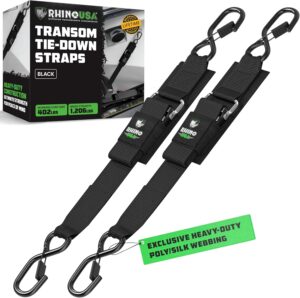
Rhino USA Boat Trailer Straps (2-Pa…
From the brand Rhino USA is a small family business founded by a father and two…
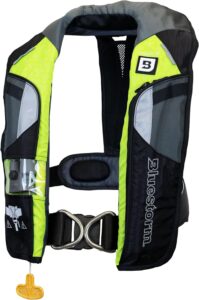
BLUESTORM Stratus 35 Inflatable Lif…
Product description Glowspot Bladder This life jacket includes a new advanced air chamber material by Erez….
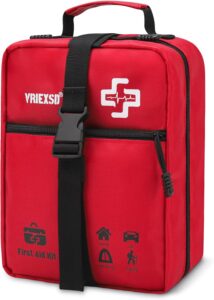
VRIEXSD 400 Piece Large First Aid K…
Product description TRY VRIEXSD FIRST AID KIT VRIEXSD hope that every user can have a calm…
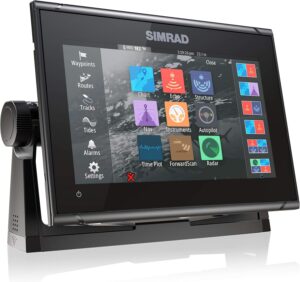
Simrad GO9 XSE – Chartplotter…
MULTIFUNCTION DISPLAY: With GO9, add GPS navigation, sonar support, radar capability, and much more to your…
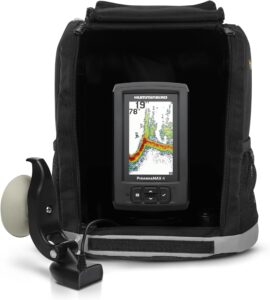
Humminbird PiranhaMAX 4 Fish Finder…
With modern styling and a larger 4.3″ color LCD, the PiranhaMAX™ 4 will give you a…
